
1. Lake Myvatn Geothermal Area
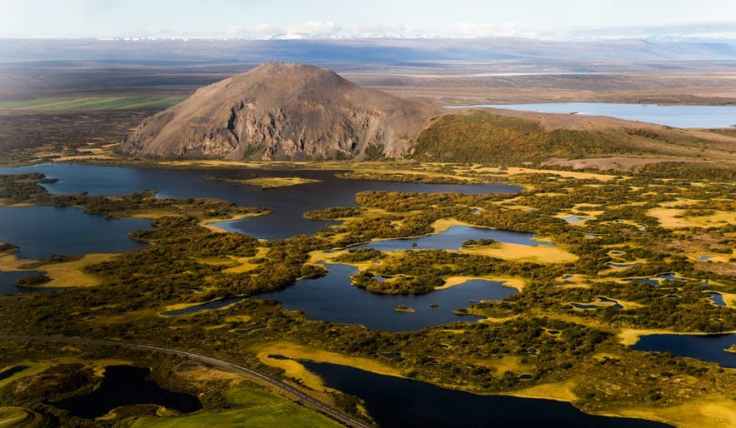
What makes lake Mývatn so special? What is there to do around lake Mývatn? What is special about the flora and fauna of lake Mývatn? What is the Diamond Circle? Read on to find out what makes the area surrounding Mývatn one of Iceland’s most popular destinations.
In northeast Iceland you’ll come across a beautiful lake, called Mývatn. This is Iceland’s fourth largest lake, 36,5 km2 and it has around 50 islets or skerries in it. The lake is shallow, full of fish, interesting flora and rich birdlife. The lake and the surrounding area is a nature reserve, and a very popular travel destination for both locals and travellers.
And it’s not surprising – the area is incredibly diverse, with impressive waterfalls, beautiful lake views, hot springs, steaming geothermal area, caves and craters!
Only one, very small, town can be found on the east side of the lake, called Reykjahlíð. Here you will find basic amenities such as a gas station, bank, mini supermarket, health care centre, school, swimming pool and a hotel. Various cafés, restaurants, hotels, guesthouses, summer cabins and a campsite are also scattered along the banks of the lake and by some of the main attractions.
Mývatn is one of the highlights of the Diamond Circle, a popular tourist travel route in the north of Iceland, and arguably the most popular destination in north Iceland – competing with nearby town of Akureyri and the village of Húsavík, the whale watching capital of Iceland.
From Reykjavík, it is about a 6-7 hour drive to reach the small village of Reykjahlíð by Lake Mývatn, in good conditions. During wintertime that could take longer, depending on the weather and road conditions.
Read on to find out all there is to know about this spectacular natural attraction in north Iceland, and get tips on all the best locations to visit.
2. Skaftafell Nature Reserve
Measuring 4800 km² (1,850 mi²), Skaftafell is home to some of the strangest and most surreal landscapes on the planet.
The area is formed by a constant duel of fire and water, and camping in the greens of a birch wood forest, surrounded by black desert sands, glacial rivers, and a spur of the Vatnajökull ice cap is always a humbling experience.
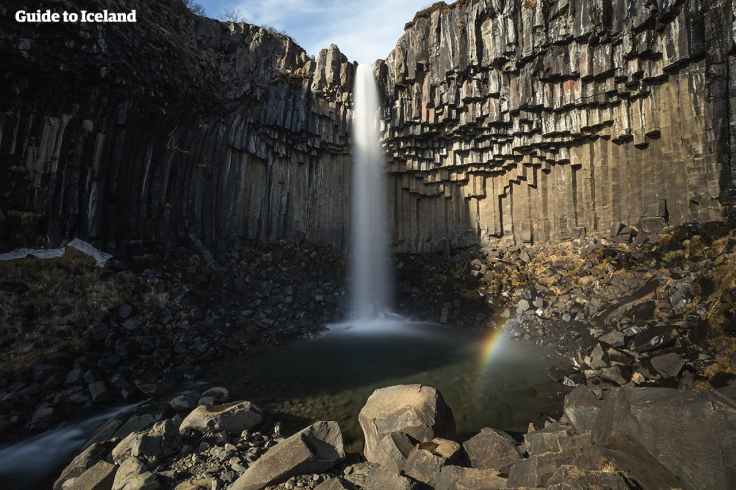
Numerous hiking trails take you away from the campground, to such natural treasures as Svartifoss (Black fall), which flows over a sublime cliff of black basalt columns.
Skaftafell is renowned for its warm climate and sunny summer days, and local services include guided tours around the area and onto the glacier, ice-climbing tours, transportation, food and accommodation.
Only a short drive away, titanic icebergs float magnificently on Jökulsárlón, a majestic sky-blue glacier lagoon, where travellers can sail among the countless mountains of ice that constantly fall from the glacier.
3. Asbyrgi Canyon
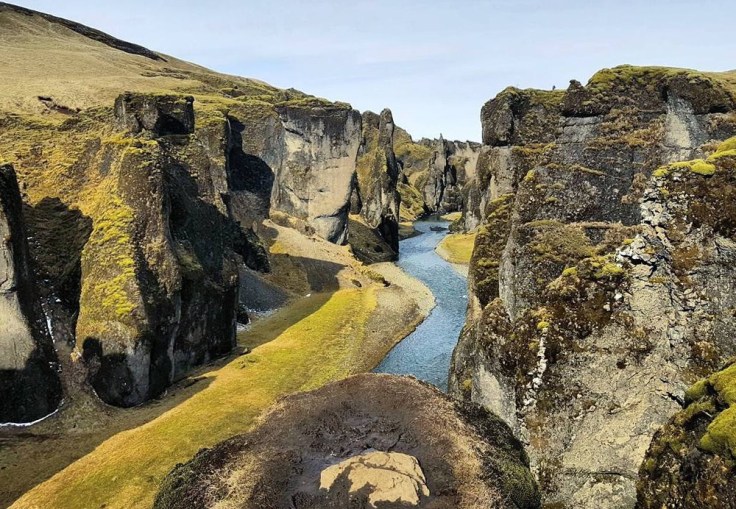
In northeast Iceland, the horseshoe-shaped canyon, Ásbyrgi awaits travellers who thirst for spiritual fulfilment through tranquilly experiencing natural splendour.
The canyon is 3.5 km (2 mi) in length and 1 km (0.6 mi) across, split by a towering cliff structure from which travellers enjoy fantastic views, while below, fellow pilgrims parade through a thicket of birch, willow, fir, larch and pine.
Although Ice Age flooding of the river Jökulsá á fjöllum likely caused Ásbyrgi’s shape, legend explains the curious frame of the gorge in another way. To this day some locals still maintain that Ásbyrgi was created when Odin’s horse, Sleipnir, touched one of its eight hooves to the ground.
Numerous myths also relate that the canyon is the principal dwelling of “hidden people” (huldufólk), who supposedly live within the cliffs.
I come completely from the mountains!
 Iceland
Leave a comment